
- africana
- albanès
- amàric
- àrab
- armeni
- azerbaidjana
- basc
- Bielorús
- bengalí
- bosnià
- búlgar
- català
- Cebuà
- Xina
- Xina (Taiwan)
- Cors
- croat
- txec
- danès
- holandès
- Anglès
- esperanto
- estonià
- finès
- francès
- frisó
- gallec
- georgiana
- alemany
- grec
- Gujarati
- crioll haitiano
- Hausa
- hawaià
- hebreu
- No
- Miao
- hongarès
- islandès
- igbo
- indonesi
- irlandesa
- italià
- japonès
- javanès
- Kannada
- kazakh
- Khmer
- Ruandès
- coreà
- kurd
- kirguis
- Treball
- llatí
- letó
- lituà
- luxemburguesa
- macedoni
- malgaxe
- Malai
- malayalam
- maltès
- Maori
- Marathi
- mongol
- Myanmar
- nepalí
- noruec
- noruec
- occità
- Pashto
- persa
- polonès
- portuguès
- panjabi
- romanès
- rus
- samoà
- Gaèlic escocès
- serbi
- Anglès
- Shona
- Sindhi
- Sinhala
- eslovac
- eslovè
- Somali
- espanyol
- Sundanès
- suahili
- suec
- Tagalog
- Tadjik
- Tamil
- tàrtar
- Telugu
- tailandès
- turc
- turcomà
- Ucraïnès
- Urdú
- uigur
- Uzbek
- vietnamita
- gal·lès
- Ajuda
- Yiddish
- ioruba
set. . 08, 2025 13:58 Tornar a la llista
Jost Fifth Wheel Parts: Key Variables in the Evolution of Commercial Vehicles
Throughout the development of commercial vehicles, the iteration of Jost Fifth Wheel Parts has always been closely linked to the improvement of transportation efficiency and safety standards. This seemingly simple connecting component is actually the core hub for vehicle power transmission and stable driving, and its technological evolution reflects the progress trajectory of the commercial vehicle industry.
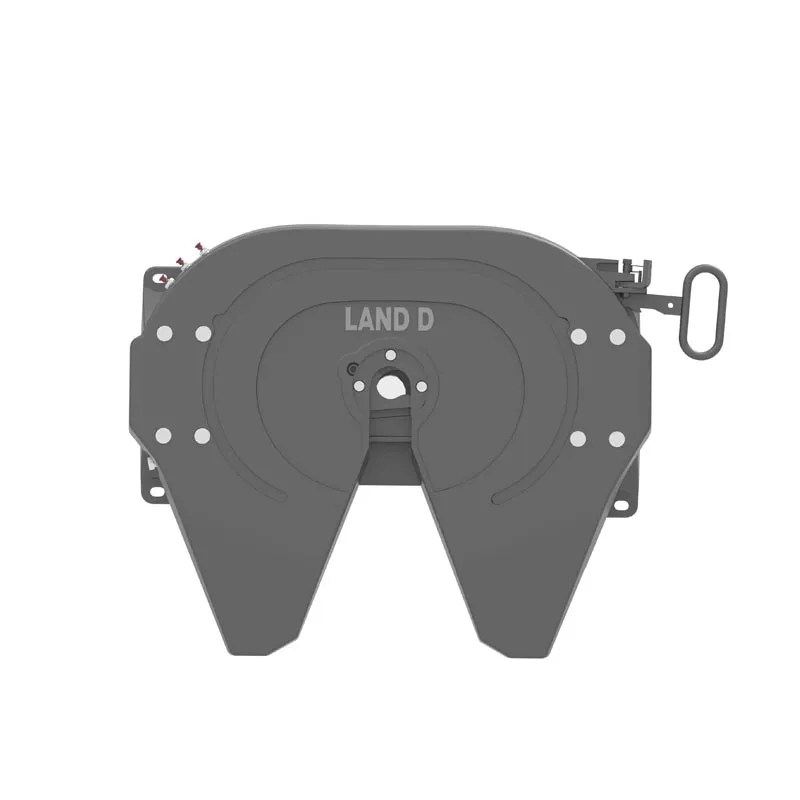
The development of Jost Fifth Wheel Parts has gone through a leap from mechanical to intelligent
The early jost fifth wheel catalog was only used as a rigid connection device, relying on a simple locking structure to achieve basic functions, adapting to a single vehicle model with limited load-bearing capacity. At the end of the 20th century, the introduction of hydraulic assist systems made their operation more convenient, and the maximum load capacity was increased to 80 tons. In recent years, with the penetration of IoT technology, intelligent Jost Fifth Wheel Parts with data interaction functions have become mainstream, which can upload connection status in real time and carry data to the vehicle management platform, providing decision-making basis for fleet scheduling.
The innovation of material technology drives the performance leap of Jost Fifth Wheel Parts
Although traditional cast iron materials are low-cost, they are heavy and have insufficient fatigue resistance. Nowadays, the hybrid structure of carbon fiber composite materials and high-strength steel has reduced the weight of jost 5th wheel parts by 40%, while increasing their impact strength by 1.5 times. The surface treatment process has also been upgraded from ordinary spray painting to nano ceramic coating, with a threefold increase in corrosion resistance and an extended service life of over 8 years in high humidity coastal environments.
The synergy between Jost Fifth Wheel Parts and other systems in commercial vehicles is becoming increasingly prominent
In the braking system, the built-in pressure sensor can synchronously sense the braking status of the tractor and trailer, and adjust the braking force distribution through the ECU to shorten the braking distance by 15%. When combined with the suspension system, the adaptive damping adjustment function can change the buffering coefficient according to the load capacity, maintaining smooth driving and reducing cargo loss rate in both unloaded and fully loaded states.
Environmental design becomes the new highlight of Jost Fifth Wheel Parts
The new fifth wheel coupler uses recyclable materials accounting for 65% of the production process, reducing carbon emissions by 20% compared to traditional techniques. The low friction coefficient bearing design reduces energy loss by 8%, indirectly improving the fuel economy of commercial vehicles. For new energy commercial vehicles, Jost Fifth Wheel Parts has also optimized the circuit integration interface to facilitate integration with the battery management system of electric trailers and support energy recovery function.
Overall, the development of 5th wheel coupling is not only a breakthrough in its own technology, but also a microcosm of the upgrading of the commercial vehicle industry. From mechanical connectivity to intelligent interaction, from single functionality to system collaboration, from performance priority to environmental protection, Jost Fifth Wheel Parts continues to break through technological boundaries. In the future, with the popularization of autonomous commercial vehicles, Jost Fifth Wheel Parts will become an important node in vehicle road coordination, playing an irreplaceable key role in improving transportation efficiency and ensuring road safety.
Jost Fifth Wheel Parts FAQs
1: What is the core role of Jost Fifth Wheel Parts in commercial vehicles?
Jost Fifth Wheel Parts are key connecting components between semi-trailer and tractor, with core functions including:
- Mechanical connection: Through the engagement of the saddle and the traction pin, the tractor can stably drag the semi-trailer, bearing vertical loads and dynamic impact forces during driving.
- Flexible steering: equipped with a turntable structure, allowing the semi-trailer to rotate horizontally relative to the tractor during turning (usually 90 ° left and right), improving the passability of complex road conditions.
- Safety redundancy: Built in mechanical locking devices (such as double swing arm locks or hook locks) to prevent accidental disengagement during driving, and some high-end models are also equipped with sensors to monitor the locking status.
- Force transmission optimization: evenly distribute the weight of the semi-trailer to the tractor beam through the saddle bottom plate, reducing local stress damage to the frame.
2: How to choose the Jost Fifth Wheel Parts model based on working conditions?
The selection should take into account the following factors:
Tonnage matching: Light weight (such as 20 tons) is suitable for urban logistics, while heavy weight (over 50 tons) is used for mining or large transportation, requiring a 20% margin to cope with dynamic loads.
Traction pin specifications: American standard (2 inches/50.8mm) and European standard (50mm) should correspond, and the pin hole tolerance should be ≤ 0.5mm to prevent wear and noise.
Ground clearance: Low saddles (such as 1.1 meters) are suitable for container transportation, while high saddles (above 1.3 meters) are used for engineering vehicles to avoid chassis scratches.
Additional features: Optional heating and antifreeze version for cold regions, recommended quick release lubrication system for frequent shaking scenarios.
3: Five key points for daily maintenance of Jost Fifth Wheel Parts
- Lubrication cycle: Inject lithium based grease into the rotary table bearings every 5000 kilometers, and manually apply high-temperature grease to the locking mechanism every week.
- Wear inspection: Focus on observing the depth of the saddle grinding disc groove. If it exceeds 3mm, it needs to be repaired by welding to avoid failure of the traction pin contact surface.
- Pre tightening force of bolts: The saddle fixing bolts need to be tightened quarterly according to the manufacturer's torque (usually 350450N · m), and anti loosening marking adhesive should be used to assist in monitoring.
- Cleaning management: Regularly use high-pressure air guns to remove accumulated dust, prevent sand particles from accelerating the wear of the turntable, and spray anti rust wax in corrosive environments.
- Emergency plan: Carry spare locking springs and safety pins with the vehicle, and check whether the saddle temperature is abnormal after a long downhill in mountainous areas.
4: The difference between Jost Fifth Wheel Parts air suspension and traditional steel spring version
Shock absorption performance: The airbag can dynamically adjust the stiffness, reducing road vibration transmission by more than 60%, especially suitable for precision instrument transportation.
Height adjustment: By controlling the airbag pressure through the ECU, the saddle can be raised and lowered within a range of ± 75mm, simplifying the swinging operation.
Weight comparison: The air suspension version is 15% and 20% lighter, but requires additional maintenance of the dryer and air ducts.
Cost analysis: The purchase price is 23 times higher, but reducing tire wear and cargo damage can result in a better TCO (Total Cost of Ownership).
5: The technological evolution direction of intelligent Jost Fifth Wheel Parts
- Status monitoring: Integrated pressure sensors and gyroscopes, real-time uploading of saddle load distribution and locking status to the fleet management system.
- Automatic lubrication: Centralized lubrication is triggered by mileage or operating conditions through IoT terminals, reducing manual intervention.
- Material innovation: Adopting wear-resistant ceramic coating on the saddle surface, the service life is three times longer than traditional alloy steel.
- V2X integration: Linked with the trailer EBS system, the mechanical locking mechanism is tightened in advance during emergency braking.
- AR assistance: Display the trailer connection angle through HUD to reduce the difficulty of reversing for novice drivers.
-
Vanguard Truck Center Austin Tx — Durable Fifth Wheel Solutions for Industrial Fleets
NotíciesDec.31,2025
-
Valley Volvo Laredo Tx – A Durable Solution for Industry and Logistics
NotíciesDec.09,2025
-
Vanguard Isuzu Houston Commercial Vehicles: Reliability and Efficiency for B2B Fleets
NotíciesDec.09,2025
-
Vanguard Trailers Mississauga - Durable Heavy-Duty Industrial Trailers for Businesses
NotíciesDec.09,2025
-
Venture Fifth Wheelers: Robust Solutions for Industrial Hauling | Land Fifth Wheel
NotíciesDec.08,2025
-
Vicar Motors of Orlando: Durable, Efficient Power Solutions for Global Industry
NotíciesDec.08,2025