
- Afrikaans
- Albanian
- Amharic
- Arabic
- Armenian
- Azerbaijani
- Basque
- Belarusian
- Bengali
- Bosnian
- Bulgarian
- Catalan
- Cebuano
- China
- China (Taiwan)
- Corsican
- Croatian
- Czech
- Danish
- Dutch
- English
- Esperanto
- Estonian
- Finnish
- French
- Frisian
- Galician
- Georgian
- German
- Greek
- Gujarati
- Haitian Creole
- hausa
- hawaiian
- Hebrew
- Hindi
- Miao
- Hungarian
- Icelandic
- igbo
- Indonesian
- irish
- Italian
- Japanese
- Javanese
- Kannada
- kazakh
- Khmer
- Rwandese
- Korean
- Kurdish
- Kyrgyz
- Lao
- Latin
- Latvian
- Lithuanian
- Luxembourgish
- Macedonian
- Malgashi
- Malay
- Malayalam
- Maltese
- Maori
- Marathi
- Mongolian
- Myanmar
- Nepali
- Norwegian
- Norwegian
- Occitan
- Pashto
- Persian
- Polish
- Portuguese
- Punjabi
- Romanian
- Russian
- Samoan
- Scottish Gaelic
- Serbian
- Sesotho
- Shona
- Sindhi
- Sinhala
- Slovak
- Slovenian
- Somali
- Spanish
- Sundanese
- Swahili
- Swedish
- Tagalog
- Tajik
- Tamil
- Tatar
- Telugu
- Thai
- Turkish
- Turkmen
- Ukrainian
- Urdu
- Uighur
- Uzbek
- Vietnamese
- Welsh
- Bantu
- Yiddish
- Yoruba
Sep . 02, 2025 16:20 Back to list
Fifth Wheel Coupler: The Evolutionary Path from Mechanical Connection to Intelligent Collaboration
In the complex network of modern transportation, the Fifth Wheel Coupler serves as the "joint" connecting the tractor and trailer, and its technological iteration directly reflects the development level of the logistics transportation industry. This seemingly inconspicuous component carries the important mission of ensuring the safety of goods and improving transportation efficiency.
The development of the Fifth Wheel Coupler has gone through a long process from simplicity to precision
Early traction connection devices could only achieve basic mechanical fixation, with a simple structure but numerous hidden dangers, and there was a frequent risk of detachment when driving on rough roads. With the advancement of industrial technology, the 5th wheel coupling with a locking mechanism emerged in the mid-20th century, which improved connection stability through a manually operated locking pin device. After entering the 21st century, breakthroughs in digital design and materials science have enabled the Fifth Wheel Coupler to achieve a qualitative leap, not only increasing its load-bearing capacity by more than three times, but also integrating intelligent sensing components, opening a new stage of intelligent development.
Special transportation scenarios impose strict requirements on the Fifth Wheel Coupler
In cold chain logistics, jost fifth wheels need to have good sealing to prevent component freezing damage in low-temperature environments; The Fifth Wheel Coupler specifically designed for the transportation of dangerous goods has added an explosion-proof locking mechanism to ensure stable connection in emergency situations; In off-road transportation scenarios, the adjustable angle Fifth Wheel Coupler can adapt to inclined road surfaces of over 30 degrees, reducing the impact of bumps on precision instruments through special buffering devices. This scenario based design continuously expands the application boundaries of the Fifth Wheel Coupler.
Daily maintenance is crucial for maintaining the performance of the Fifth Wheel Coupler
Regularly checking the wear level of the locking mechanism is the top priority. If any deformation or cracks are found in the locking pin, it should be replaced immediately; Special lubricating grease should be added to the rotating shaft pin every week to avoid damage to metal parts due to friction and overheating; In humid environments, rust prevention treatment should be carried out monthly, and special anti-corrosion coatings should be used to protect key areas. Although these maintenance details are simple, they can extend the service life of jost fifth wheel adjustment by more than 50% and significantly reduce the occurrence of failures.
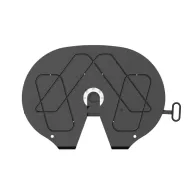
In recent years, the technological breakthroughs of Fifth Wheel Coupler have focused on three directions
One is adaptive connection technology, which detects the weight of the trailer in real time through sensors and automatically adjusts the locking force; The second is the integration of energy recovery devices, which convert the vibration energy during driving into electrical energy to supply power to onboard equipment; The third is the application of blockchain technology, which records the time, load, and other data of each connection through a built-in chip, providing accurate reference for logistics scheduling. These innovations have upgraded the Fifth Wheel Coupler from a simple mechanical component to an intelligent collaborative unit.
In summary, the development trajectory of fifth wheel jost is a microcosm of technological progress in the transportation industry. From the initial mechanical connection to today's intelligent collaboration, it has not only achieved exponential improvement in load-bearing capacity and safety performance, but has also become a key node in promoting the efficient operation of logistics systems. With the maturity of autonomous driving technology, the future Fifth Wheel Coupler will achieve dynamic communication between vehicles, playing a more central role in unmanned transportation scenarios and continuously injecting power into the intelligent transformation of modern logistics.
Fifth Wheel Coupler FAQs
What is the core function of the Fifth Wheel Coupler on heavy-duty trucks?
The Fifth Wheel Coupler is a critical connecting component between a semi-trailer and a tractor, responsible for transmitting power, braking force, and carrying loads. Its high-strength alloy structure can withstand the impact of complex road conditions, and is equipped with an automatic locking mechanism to ensure that it will not accidentally detach during driving. The advanced Fifth Wheel Coupler also comes with a lubrication system and wear indicator, significantly reducing maintenance costs.
How to determine if the Fifth Wheel Coupler needs to be replaced?
Immediate maintenance is required when the following symptoms occur: incomplete closure of the locking hook (with a gap of more than 1mm), radioactive cracks on the bottom plate, and pivot pin wear exceeding 5% of the original diameter. It is recommended to conduct magnetic particle inspection every 150000 kilometers, especially paying attention to fatigue cracks at the connection between the saddle base plate and the frame. Such hidden damages may cause fracture accidents.
How do different Fifth Wheel Coupler types affect transportation efficiency?
The fixed Fifth Wheel Coupler is suitable for standard container transportation, while the movable design can alleviate the impact load during sudden braking. It is worth noting that the 90 ° angle Australian Fifth Wheel Coupler can achieve "folding reverse", which has obvious advantages in narrow docks, but sacrifices about 3% of fuel economy. Cold chain transportation tends to choose models with insulation gaskets.
Special maintenance points for Fifth Wheel Coupler in extremely cold winter environments
-When the temperature is below 20 ℃, traditional lubricating grease will solidify and cause the locking mechanism to fail. Synthetic low-temperature lubricants (such as polyurea based grease) should be used instead, and the saddle snow should be manually removed before each coupling. Users in the Siberian region are advised to install electric heating plates to maintain the working temperature of the Fifth Wheel Coupler above -10 ℃.
How does the intelligent Fifth Wheel Coupler revolutionize logistics management?
The latest IoT Fifth Wheel Coupler has a built-in 6-axis sensor that can monitor real-time data such as load distribution and attachment angle. When abnormal lateral force is detected (such as tire pressure loss), ESP linkage will be triggered through the CAN bus. The fleet management system can optimize trailer allocation based on this, and according to actual tests, it can reduce the empty mileage by 17%. Some models also support NFC recognition of trailer information to prevent human registration errors.
-
Vanguard Truck Center Austin Tx — Durable Fifth Wheel Solutions for Industrial Fleets
NewsDec.31,2025
-
Valley Volvo Laredo Tx – A Durable Solution for Industry and Logistics
NewsDec.09,2025
-
Vanguard Isuzu Houston Commercial Vehicles: Reliability and Efficiency for B2B Fleets
NewsDec.09,2025
-
Vanguard Trailers Mississauga - Durable Heavy-Duty Industrial Trailers for Businesses
NewsDec.09,2025
-
Venture Fifth Wheelers: Robust Solutions for Industrial Hauling | Land Fifth Wheel
NewsDec.08,2025
-
Vicar Motors of Orlando: Durable, Efficient Power Solutions for Global Industry
NewsDec.08,2025