
- Afrikaans
- Albanian
- Amharic
- Arabic
- Armenian
- Azerbaijani
- Basque
- Belarusian
- Bengali
- Bosnian
- Bulgarian
- Catalan
- Cebuano
- China
- China (Taiwan)
- Corsican
- Croatian
- Czech
- Danish
- Dutch
- English
- Esperanto
- Estonian
- Finnish
- French
- Frisian
- Galician
- Georgian
- German
- Greek
- Gujarati
- Haitian Creole
- hausa
- hawaiian
- Hebrew
- Hindi
- Miao
- Hungarian
- Icelandic
- igbo
- Indonesian
- irish
- Italian
- Japanese
- Javanese
- Kannada
- kazakh
- Khmer
- Rwandese
- Korean
- Kurdish
- Kyrgyz
- Lao
- Latin
- Latvian
- Lithuanian
- Luxembourgish
- Macedonian
- Malgashi
- Malay
- Malayalam
- Maltese
- Maori
- Marathi
- Mongolian
- Myanmar
- Nepali
- Norwegian
- Norwegian
- Occitan
- Pashto
- Persian
- Polish
- Portuguese
- Punjabi
- Romanian
- Russian
- Samoan
- Scottish Gaelic
- Serbian
- Sesotho
- Shona
- Sindhi
- Sinhala
- Slovak
- Slovenian
- Somali
- Spanish
- Sundanese
- Swahili
- Swedish
- Tagalog
- Tajik
- Tamil
- Tatar
- Telugu
- Thai
- Turkish
- Turkmen
- Ukrainian
- Urdu
- Uighur
- Uzbek
- Vietnamese
- Welsh
- Bantu
- Yiddish
- Yoruba
Sep . 08, 2025 14:01 Back to list
Jost Fifth Wheel: The Hardcore Hub Of Commercial Vehicle Connectivity Systems
In the commercial vehicle transportation system, the Jost Fifth Wheel is a key node connecting the tractor and trailer, and its performance directly affects the efficient operation of the transportation chain and driving safety. Unlike traditional connection devices, the modern Jost Fifth Wheel has become a composite core component that integrates load-bearing, buffering, and regulation through material innovation and structural optimization.
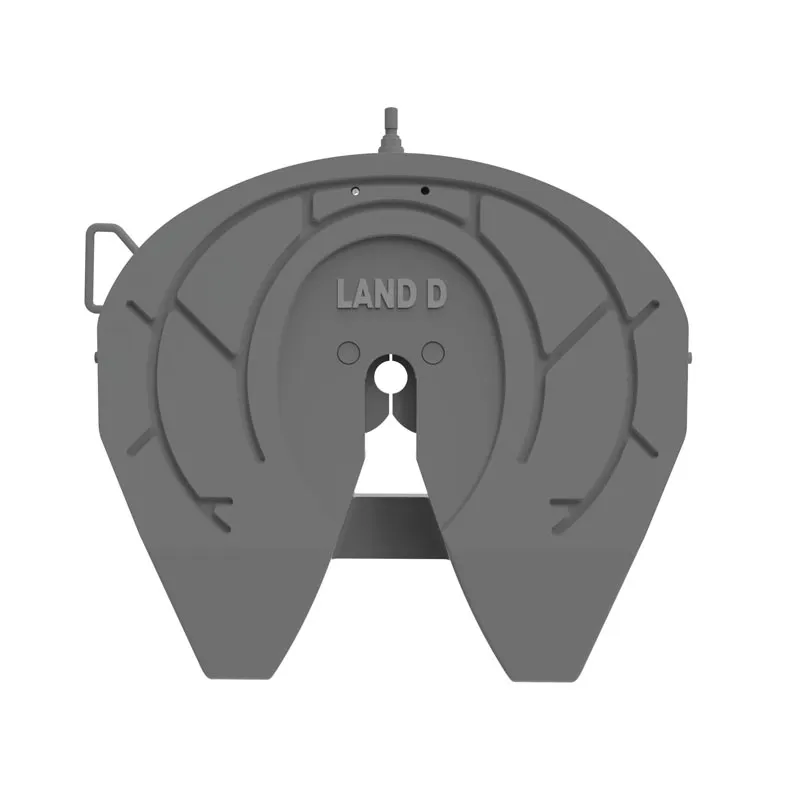
The structural design of Jost Fifth Wheel hides precise mechanical logic
The main bearing plate of the fifth wheel coupling is made of high-strength ductile iron cast as a whole. After isothermal quenching treatment, the surface hardness reaches HB300 or above, and it can withstand an instantaneous impact force of 150 tons. The connecting pin shaft is equipped with self-lubricating bearings and a labyrinth seal structure, which can maintain flexible rotation in environments ranging from 30 ℃ to 100 ℃. The bottom buffer device adopts a combination of multiple sets of disc springs, which can absorb more than 80% of the energy of road bumps and reduce fatigue damage to the connecting parts.
Technological breakthrough enables Jost Fifth Wheel to achieve functional leap
The jost 5th wheel intelligent sensing module is embedded in the load-bearing area and can collect real-time weight distribution data. When the unbalanced load exceeds 15%, it automatically triggers the cab alarm. The hydraulic quick separation system replaces traditional manual operation, and can be controlled by buttons in the cab to complete trailer detachment within 3 seconds, which is 5 times more efficient than traditional methods. The adaptive gap compensation device can automatically adjust the fitting gap according to the degree of wear, extending the maintenance cycle to 120000 kilometers.
Jost Fifth Wheel has developed a segmented product matrix to meet diverse transportation needs
The special version for cold chain transportation adopts anti-corrosion coating, combined with temperature sensing alarm function, to ensure the reliability of connection in low temperature environment; Strengthening the bottom support structure for heavy-duty engineering transportation, increasing the density of reinforcement by 30% to adapt to heavy load scenarios such as mining and infrastructure construction; The urban logistics lightweight model adopts an aluminum alloy frame, which reduces the overall weight by 20%, and is designed with a low floor for easy and fast loading and unloading.
Security redundancy design is the core competitiveness of Jost Fifth Wheel
The dual locking mechanism can maintain stable connection even in the event of a single system failure through mechanical interlocking and hydraulic assisted locking, and has passed the national JT/T 7782010 standard limit test. During emergency braking, the synchronous triggering device can advance the braking response of the trailer by 0.8 seconds, coupled with the anti recoil structure, to avoid the impact of the trailer on the tractor.
In short, with its scientific structural design, cutting-edge technological applications, scenario based product layout, and strict safety standards, Jost 5th wheels have become a reliable guarantee for commercial vehicle transportation. It is not only a hub for physical connections, but also drives the development of commercial vehicles towards efficiency, safety, and intelligence through intelligent upgrades, playing an irreplaceable and important role in the field of logistics transportation. In the future, with the popularization of new energy commercial vehicles, wheel coupling will also integrate more electrification and networking technologies, continuously empowering the transportation industry.
Jost Fifth Wheel FAQs
What is the core role of the Jost Fifth Wheel on heavy-duty trucks?
The Jost Fifth Wheel is the core connecting component between a semi-trailer and a tractor, and its core functions include:
- Mechanical connection: Fix the saddle plate and the saddle pin of the semi-trailer through a locking mechanism to ensure a rigid connection between the two;
- Load transfer: bear the vertical weight of the semi-trailer (up to tens of tons) and disperse it to the chassis of the tractor;
- Dynamic coordination: Allow ± 12 ° lateral sway during turns and bumps to reduce body twisting stress;
- Safety redundancy: Equipped with a secondary locking device to prevent accidental disengagement during driving.
A typical example is the JOST brand Jost Fifth Wheel, which has a dynamic load capacity of up to 32 tons, far exceeding ISO standards.
How to determine if the Jost Fifth Wheel needs to be replaced?
The following 5 situations require immediate maintenance or replacement:
Excessive wear: The thickness of the saddle wear plate is less than 3mm (usually 810mm for new parts);
Locking failure: During manual testing, the locking hook cannot automatically rebound to the locking position without external force;
Crack propagation: Magnetic particle inspection revealed that the length of the matrix crack exceeded 5mm;
Deformation exceeding limit: Measure the saddle plane with a ruler, and the local depression is greater than 2mm/m ²;
Continuous abnormal noise: A metallic knocking sound is emitted while driving, indicating that the clearance between the bushings is too large.
It is recommended to conduct professional testing every 150000 kilometers or 2 years, and shorten it to six months for harsh working conditions such as mines.
Why does the European Jost Fifth Wheel generally adopt the No. 50 saddle pin standard?
The 50 saddle pin (diameter 50.8mm) has become mainstream in Europe due to three major advantages:
- Historical evolution: After World War II, the German DIN standard was widely adopted, gradually replacing the American 2-inch saddle pin;
- Strength optimization: The sales cross-sectional area of No. 50 is 28% larger than that of the American standard, which is more suitable for the EU's GCW requirements of over 40 tons;
- Compatible design: ISO 3371981 has designated it as an internationally recognized specification, which is compatible with all models of car manufacturers such as Scania.
It is worth noting that Australia still insists on using American standards, resulting in additional modifications required for imported trucks.
What are the technical points for lubrication and maintenance of Jost Fifth Wheel?
Professional lubrication should pay attention to:
Oil selection: NLGI grade 2 lithium based grease must be used, which has better water resistance than calcium based grease;
Lubrication cycle: Supplement every 5000 kilometers during long-distance transportation, and replace with 30 ℃ low-temperature grease in cold regions;
Key parts: prioritize handling the swing pivot and locking hook pivot, and inject grease each time until the old grease is completely discharged;
Cleaning first: Use high-pressure steam to remove dust before adding oil to avoid abrasive effects.
Error case: A certain team's use of regular butter resulted in the Jost Fifth Wheel freezing and unable to turn at 15 ℃.
What are the innovations of the air suspended Jost Fifth Wheel compared to the mechanical one?
The breakthrough of air suspension technology is reflected in:
- Shock absorption revolution: By replacing steel plate springs with airbags, it reduces 80% of road impact transmission;
- Automatic leveling: ECU adjusts the air pressure in real time to maintain the trailer platform tilt angle<0.5 °;
- Weight advantage: For example, BPW's HYAIR system is 47kg lighter than traditional structures;
- Intelligent expansion: It can integrate tire pressure monitoring data interface.
But the cost is higher (about 2.5 times that of mechanical), making it more suitable for high value-added scenarios such as precision instrument transportation.
-
Vanguard Truck Center Austin Tx — Durable Fifth Wheel Solutions for Industrial Fleets
NewsDec.31,2025
-
Valley Volvo Laredo Tx – A Durable Solution for Industry and Logistics
NewsDec.09,2025
-
Vanguard Isuzu Houston Commercial Vehicles: Reliability and Efficiency for B2B Fleets
NewsDec.09,2025
-
Vanguard Trailers Mississauga - Durable Heavy-Duty Industrial Trailers for Businesses
NewsDec.09,2025
-
Venture Fifth Wheelers: Robust Solutions for Industrial Hauling | Land Fifth Wheel
NewsDec.08,2025
-
Vicar Motors of Orlando: Durable, Efficient Power Solutions for Global Industry
NewsDec.08,2025